
I spent my 30s treating protein like a number to hit.
I was competing, training twice a day, and protein was simply fuel for the next session. Then my own recovery started slowing down and it finally clicked: after 40, you're not feeding a workout anymore. You're maintaining the scaffolding that holds you up.
Muscle, bone, the enzymes your cells use to repair themselves overnight — all of it runs on this one input. Miss it for a day and nothing collapses. Miss it for years and the repair work quietly falls behind, which is the part nobody feels until much later.
Why your needs change after 40
Muscle is your metabolic currency as you age. It's where your body stores and uses glucose, it protects your joints and your bones, and it's what lets you carry the groceries, get up off the floor and say yes to the trip.
Two things work against it in midlife. Most of us start losing muscle gradually from our 30s, and that loss speeds up through perimenopause and menopause as estrogen falls. And older muscle becomes less responsive to protein, so it takes a bigger dose at a meal to get the same repair signal a 25-year-old gets from a smaller one.
That's why the small amounts scattered through a busy day that used to be fine often aren't anymore.
How much I aim for
With my clients, the starting point is 0.8 to 1 gram of protein per pound of body weight a day. For a woman who weighs 140 pounds, that's 112 to 140 grams.
The total matters, and so does how it's spread. I aim for 30 to 45 grams at each meal, rather than a small breakfast, a light lunch and most of it at dinner. That last pattern is the one I see most often when a new client logs her food, and it leaves her hungry, snacking and short on protein at the same time.
If you have kidney disease or your doctor has asked you to limit protein, follow their advice. This is a general target, not a prescription.
What it looks like on a plate
Eggs and salmon get most of the attention. I like to rotate in a few others for variety — sardines, Greek yogurt and grass-fed beef are three I come back to again and again.
Roughly what common foods give you:
| Food | Serving | Protein |
|---|---|---|
| Eggs | 3 large | about 18 g |
| Plain Greek yogurt | 1 cup | about 20 g |
| Wild salmon | 4 oz cooked | about 25 g |
| Sardines | 1 tin | about 20 g |
| Grass-fed beef | 4 oz cooked | about 28 g |
| Chicken breast | 4 oz cooked | about 35 g |
| Whey or plant protein | 1 scoop | 20–25 g |
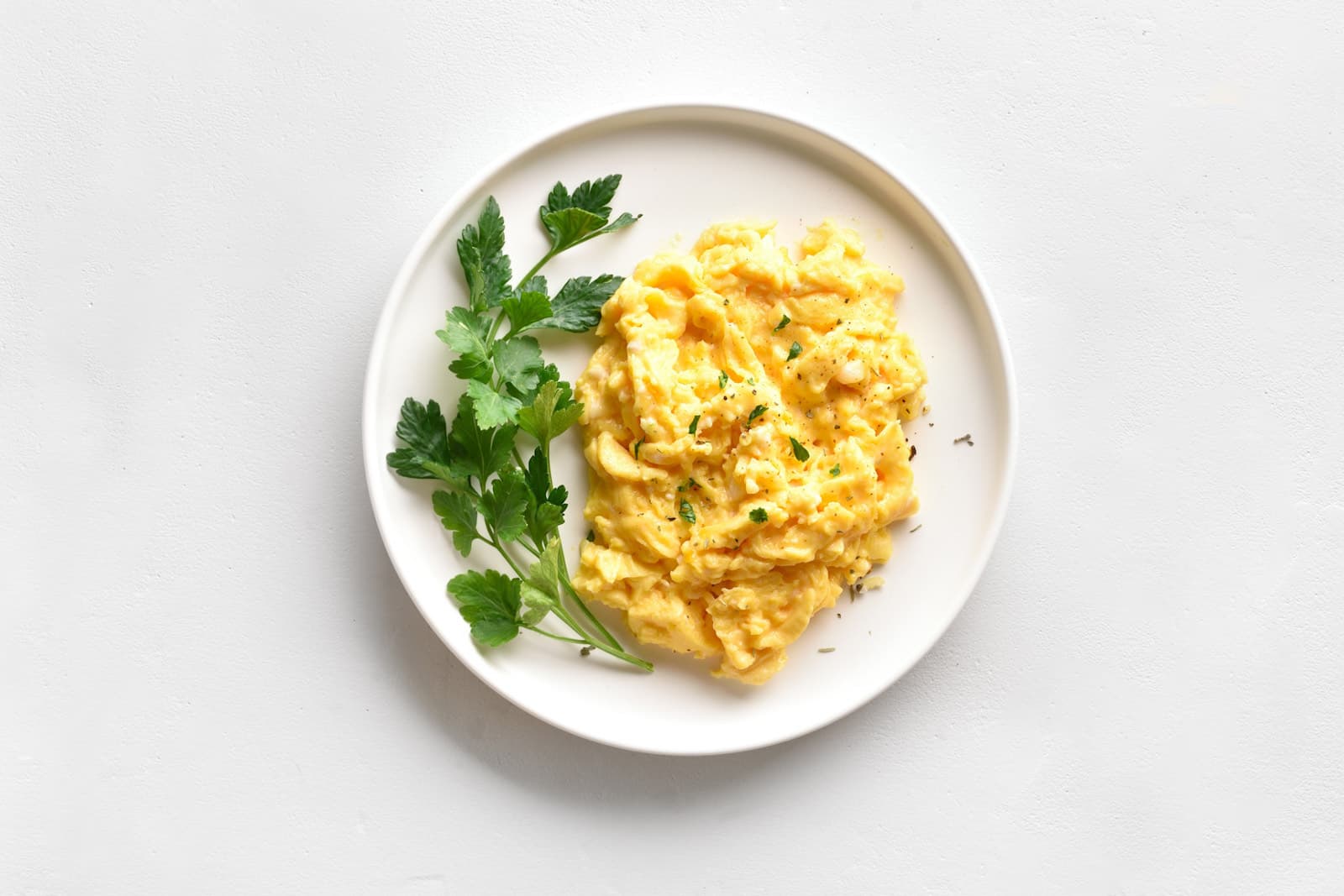
A breakfast that gets you there: three eggs scrambled with spinach, and a cup of Greek yogurt with berries on the side. A lunch that does it: a big salad with a palm-and-a-half of salmon or chicken on top. You don't have to track every gram. It helps a lot to decide your protein before you're hungry.
The three places protein goes missing
Breakfast. Coffee and a piece of toast is the most common start I see, and it puts you 30 grams behind before nine in the morning.
The busy day. A skipped lunch, then dinner at eight. The day's total ends up low, and almost all of it lands at night.
The snack that feels like food. A granola bar or a latte keeps you going for an hour and carries very little protein.
How I choose a protein powder
A powder is a tool for the days when real food isn't practical. It isn't a replacement for meals.
I was standing in the protein aisle at Sprouts recently, wondering how anyone chooses. So many labels promise "clean" and "premium," and most of them hide fillers, added sugars, gums and artificial sweeteners behind a pretty design.
Here's what I actually look for:
- A single protein source. It should say whey, casein or one plant protein — not a paragraph of ingredients you can't pronounce.
- Third-party certification. NSF Certified for Sport, Informed Choice or USP Verified means what's on the label is actually what's in the tub. Certified organic is a bonus.
- No sneaky sweeteners. Watch for maltodextrin, sucralose and "natural flavors" doing a lot of heavy lifting.
- A short ingredient list, ideally tested for heavy metals and contaminants.
Where to start this week
Pick one meal — usually breakfast — and get 30 grams of protein into it every day for a week. Once that's automatic, do the same with lunch.
The first changes tend to show up in your afternoons: steadier energy, fewer cravings, better recovery from training. The muscle and bone benefits take longer to see, and they're the ones that matter most for the next thirty years.
If you'd like the meals already worked out, my book How To Eat has more than 120 recipes with the protein counted for you. And if you want to see where your nutrition sits next to your sleep, stress and training, discover your wellnessIQ.